
High-Quality Computer Vision Datasets for Advanced AI Development
Image and Video Datasets tailored for specific use cases in healthcare, e-commerce, robotics, autonomous driving, and more

Language & Text Datasets
These datasets contain multilingual text and handwriting samples in languages like Arabic, Chinese, English, Japanese, and more. They are primarily designed for natural language processing, text recognition, and multilingual applications, supporting tasks such as OCR (Optical Character Recognition), text classification, and translation models.

Facial Recognition Datasets
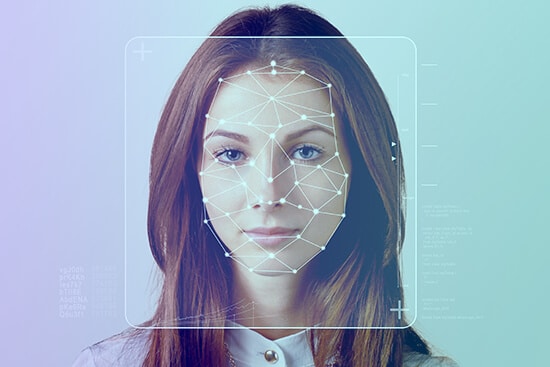
These datasets involve facial features and specific body parts, with applications in facial recognition, expression detection, and part segmentation. They aid in developing face and body detection, tracking, and recognition models, useful in applications like biometrics, security, and facial expression analysis.
Clothing & Fashion Datasets
Clothing and fashion datasets provide segmentation, classification, and keypoint data specific to apparel items. These datasets support fashion recommendation engines, virtual try-ons, and retail inventory management by analyzing various aspects of clothing such as types, patterns, and accessories.

Gesture, Pose & Activity Datasets
These datasets include gesture and pose-related data for human activity recognition. They focus on skeleton-based body key points, hand gestures, and human posture, supporting applications like AR/VR, gesture recognition, gaming, and human-computer interaction.

Environment & Scene Segmentation Datasets
Environment and scene segmentation datasets cover various scenes, both indoors and outdoors, including traffic, roads, and objects within urban and rural settings. They aid in training autonomous driving, smart city surveillance, and navigation applications by providing scene understanding and semantic segmentation data.

Specific Object & Contour Segmentation Datasets
These datasets provide detailed segmentation of particular objects and contours, such as food, buildings, and machinery. They are useful for training models to recognize and segment specific shapes, objects, and boundaries, supporting use cases in robotics, quality control, and automated inspections.

Automotive Datasets
Datasets in this category focus on industrial applications, including images of machine parts, damaged equipment, and barcodes. These datasets assist in quality assurance, automated machine inspection, defect detection, and industrial process monitoring, ideal for manufacturing and warehouse automation.

Anti-Spoofing Datasets
Ready-to-use, licensable anti-spoofing video datasets for face liveness detection, covering 3D mask, makeup, replay, and real-vs-spoof scenarios. Unannotated clips fit pretraining and evaluation, with optional custom collection, expert labeling, and privacy safeguards under flexible licensing.

Video Datasets
Off-the-shelf, licensable video datasets for AI: YouTube Kids (80K hours), short films & weddings (500 hours), historical documentaries (500 hours), documentary filmmaker collection (3,000 hours across eight countries), and martial-arts fights (1,000 hours). All unannotated; optional collection, annotation, and de-identification.

Frequently Asked Questions (FAQ)
1. What are computer vision datasets?
Computer vision datasets are collections of labeled images and videos used to train AI/ML models to recognize, analyze, and interpret visual data from the real world.
2. Why are computer vision datasets important?
These datasets are essential for training AI systems to perform tasks like object detection, image classification, segmentation, and activity recognition. They enable AI/ML models to understand and process visual information accurately.
3. What industries use computer vision datasets?
Industries such as healthcare, e-commerce, retail, autonomous driving, and security use these datasets for applications like patient diagnostics, product recommendation engines, navigation, and quality control.
4. How are computer vision datasets collected?
Datasets are collected from diverse and controlled environments to ensure representation across different demographics, lighting conditions, and scenarios. Strict guidelines are followed for resolution, file formats, and quality.
5. How are these datasets annotated?
Annotation involves labeling images and videos with metadata, bounding boxes, landmarks, key points, and segmentation masks to provide detailed and precise information for AI training.
6. Are the datasets privacy-compliant?
Yes, all datasets comply with global privacy standards like GDPR, ensuring ethical sourcing, de-identification of personal data, and contributor consent.
7. Can the datasets be customized?
Yes, datasets can be tailored to specific project requirements, such as demographics, environmental conditions, object types, or industry-specific use cases.
8. How is the quality of the datasets ensured?
Quality is ensured through rigorous validation processes, expert annotation, and adherence to strict guidelines for image clarity, resolution, and consistency.
9. How can these datasets integrate into AI workflows?
The datasets are delivered in standard formats such as JSON, CSV, or XML, with detailed metadata, making them easy to integrate into AI/ML workflows for training, testing, and validation.
10. What licensing options are available?
Flexible licensing options are provided, including off-the-shelf datasets or fully customized solutions to meet specific project needs.
11. What is the cost of computer vision datasets?
The cost varies based on dataset size, level of customization, and licensing requirements. Contact us for a detailed quote.
12. What are the delivery timelines?
Delivery timelines depend on the size and complexity of the project, but are designed to meet deadlines efficiently.
