


Shaip Expands Its Computer Vision Data Catalog with New Image and Video Datasets
Most computer vision projects don’t stall at the model. They stall at the data. Teams have the architecture, the compute and the engineers, and then

Hand-Pose Annotation for Dexterous Robot Manipulation
Hand pose annotation is the process of labeling how a hand and its fingers move across every frame of a video, so that robots can

Pose Estimation for Physical AI: How Keypoint & Motion Data Teaches Robots to Move
Pose estimation is the computer-vision task of locating body keypoints — joints and facial landmarks — and connecting them into a skeleton that describes how

What is Conversational AI? How It Works, and Why the Data Layer Decides Everything
Explore how Conversational AI is reshaping industries with personalized interactions. Check out our Infographic.

When Synthetic Data Makes Sense in Computer Vision (And When It Backfires)
Download Infographics Every computer vision team eventually hits the same wall: the data you need most is the data you can’t get. The near-miss at

Why Multilingual Speech Data Is Critical for Global AI
Download Infographics Your voice model works beautifully in the demo. Then it meets a real user — someone with a Scottish accent, ordering in Hinglish,

The Future of Data Annotation 2026 & Beyond
Automation won’t replace annotators. It will empower them. Data annotation is evolving from “labeling work” into AI data operations: higher judgment, stronger governance, tighter evaluation
OCR in 2026: How AI Turns Any Document into Data It Can Act On
OCR is a technology that allows machines to read printed text & images. It is often used in business applications, such as digitizing documents for storage or processing, & in consumer applications, such as scanning a receipt for expense reimbursement.
What is NLP? How it Works, Benefits, Challenges, Examples
Discover our NLP infographic: Learn how it works, explore benefits, challenges, market growth, use cases, and future trends in Natural Language Processing.
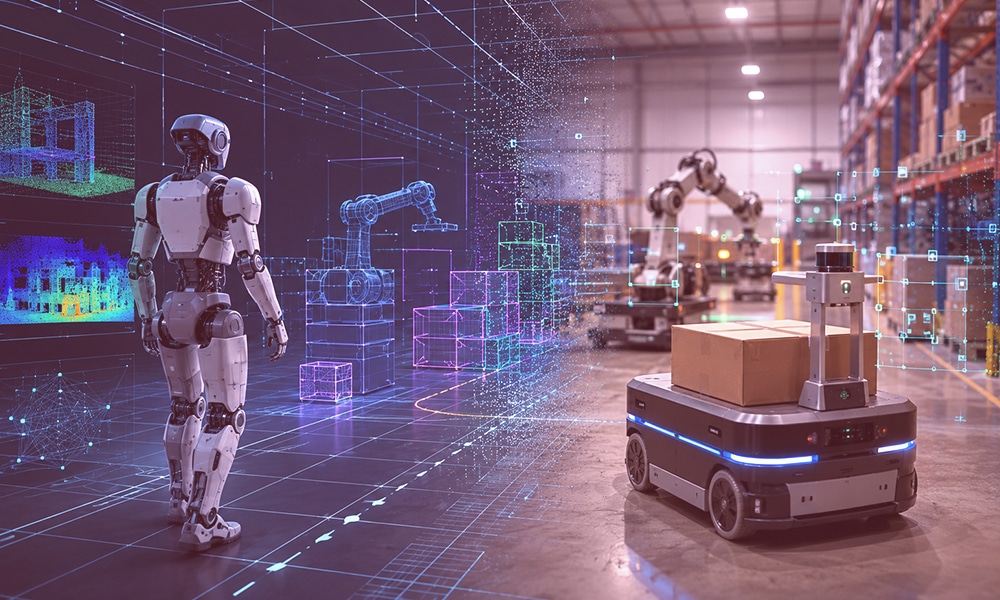
Synthetic vs Real-World Data for Robotics: Which to Buy for Your Physical AI Project
In physical AI, the model is rarely the bottleneck — the data is. A robot policy that runs flawlessly in a demo and then stalls
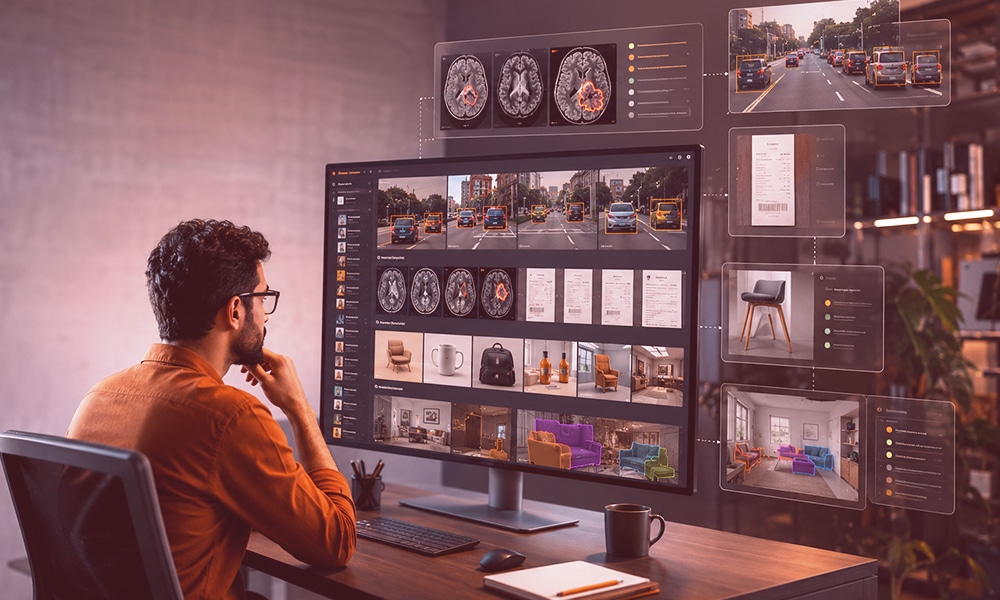
22 Free Image Datasets for Computer Vision to Boost Your Project [2026 Updated]
A computer vision model is only as sharp as the images you train it on. Feed it a clean, well-labeled set and it learns to
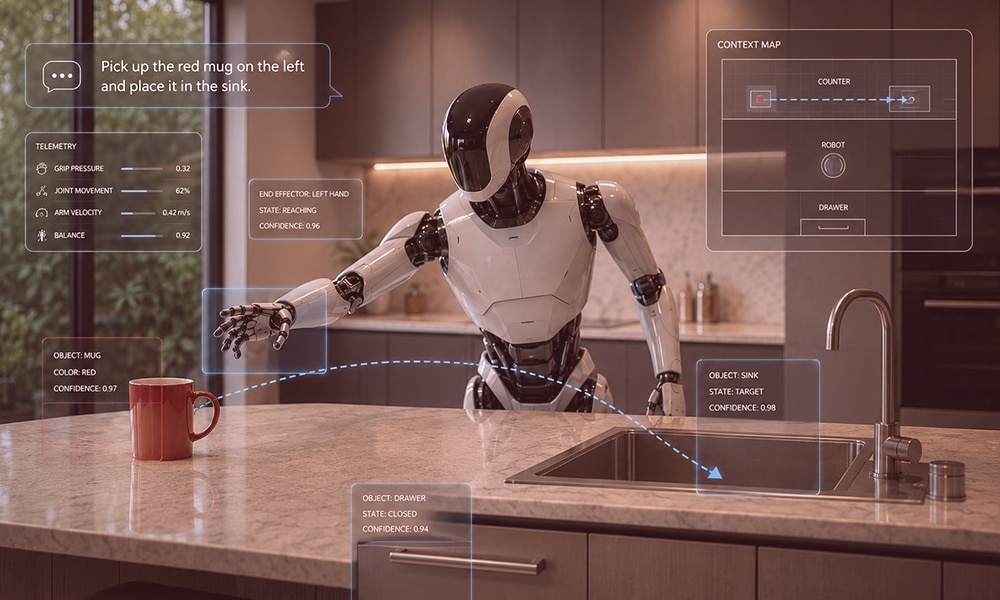
Multimodal Data for Humanoid Robots: Vision, Language, Action, Telemetry, and Context
Ask a humanoid robot to “pick up the red mug on the left and place it in the sink,” and a remarkable amount has to

What is Voice Recognition: Why You Need it, Use Cases, Examples & Advantages
Voice recognition is a technology that identifies and authenticates a person based on the unique characteristics of their voice, while its close sibling, speech recognition,
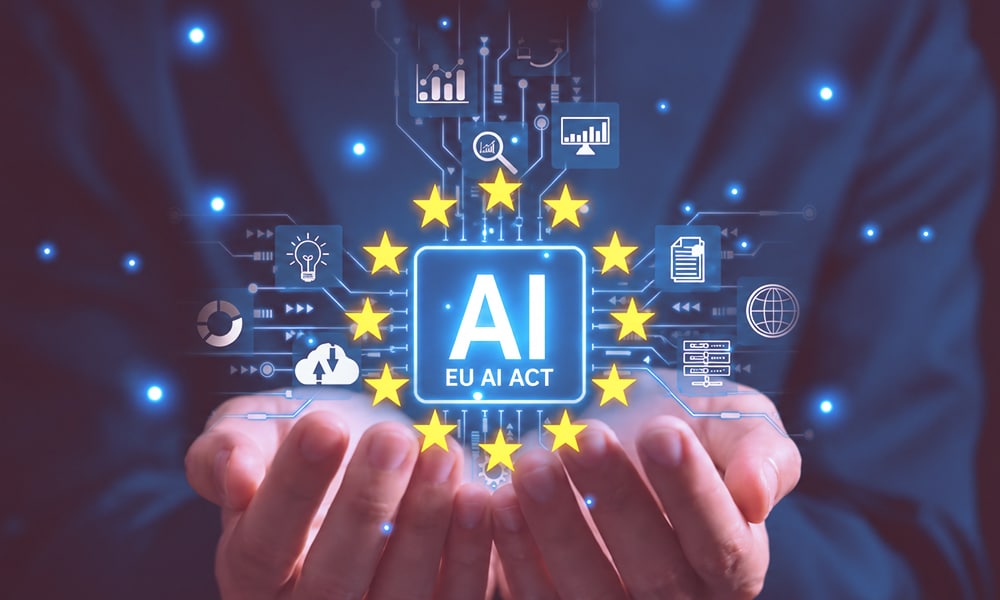
Getting Your AI Data Ready for the EU AI Act: A Plain-English Checklist
When companies stumble on the EU AI Act, it’s usually not the clever AI model that trips them up — it’s the paperwork behind the

LLM Evaluation with Domain Experts: The Complete Guide for Enterprise Teams
If your company has started using AI tools that generate text — chatbots, document summarizers, policy assistants, or customer service bots — you have probably

EU vs UK AI Rules: A Plain-English Comparison
Two of the world’s biggest markets sit a short flight apart and have taken almost opposite paths on AI. The European Union wrote one big

EU AI Act 2026 Deadlines: A Plain-English Guide to What Just Changed
The EU AI Act is Europe’s big rulebook for artificial intelligence. Like most big rulebooks, it doesn’t switch on all at once — different rules

How Robot Training Data and Manipulation Datasets Power Real-World Robotics in 2026
Most robotics models work flawlessly in the demo and fall apart in deployment. The reason is almost never the architecture — it’s the data. A

Robot Training Data Strategy: Teleoperation vs Simulation vs Human Video for Embodied AI
Building a robot policy that works in the real world isn’t a computer problem anymore — it’s a data problem. Embodied AI teams have three

The Physical AI Dataset Stack: Human Demonstrations, Robot Actions, VLA Data, and Long-Horizon Tasks
Most physical AI teams know they need data. Few know they need a stack of it. The capabilities a deployed humanoid, AV, or warehouse robot
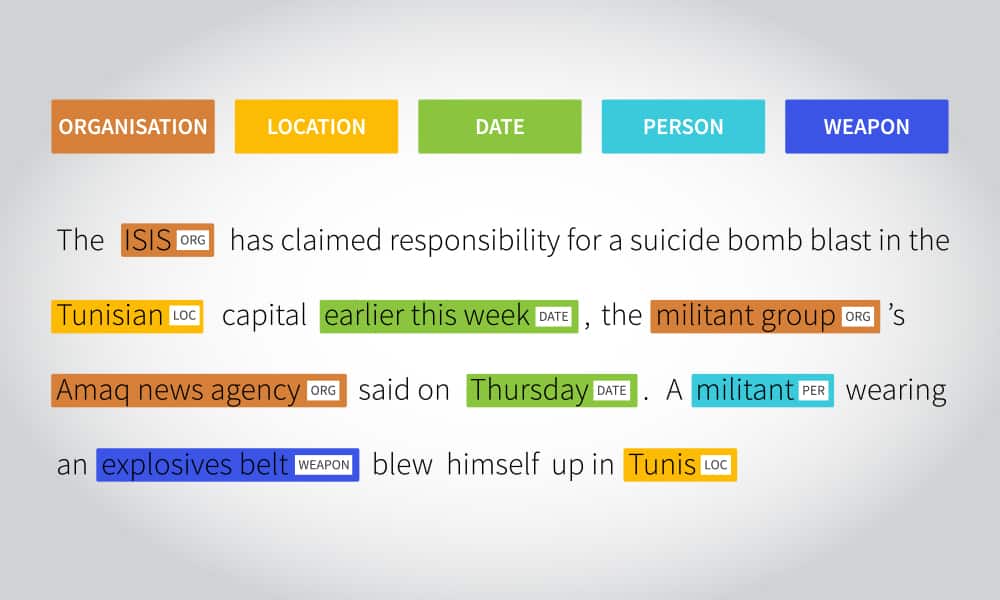
What is Named Entity Recognition (NER) – Example, Use Cases, Benefits & Challenges
Named entity recognition identifies and classifies spans of text into predefined categories. Named entity recognition is the natural language processing (NLP) technique that finds key facts

22 Best Open-Source OCR Datasets to Train Your ML Models in 2026
Optical character recognition now powers receipt scanning, ID verification, invoice automation, historical archive digitization, and stylus-based note apps. The OCR market is projected to reach

Physical AI is Redefining Autonomous Intelligence
For the past decade, artificial intelligence mostly lived on a screen. It answered questions, finished sentences, sorted images, and recommended the next thing to watch.

VLM vs VLA: Why Vision-Language Models Are Not Enough for Robotics
Two model classes get conflated in robotics conversations: vision-language models and vision-language-action models. They sound similar, both ingest images and text, and both come from
