Physical AI Annotation
Robot Grasping & Manipulation Annotation Services
First-person video is shaky and full of hidden objects. Shaip’s experts collect and label it, with consent, so robots can learn from how people work.


What is robot grasping and manipulation annotation?
Grasping and manipulation annotation is the labeling of how a robot hand or gripper should interact with an object — grasp pose (position, orientation and gripper width), contact points, approach path and the outcome of each attempt.
Grasp learning needs large volumes of labeled examples across many object shapes, sizes and materials. For production robots, labeling failed grasps alongside successful ones gives models the examples they need to notice a slip and recover.
Types of grasping & manipulation annotation we deliver

Grasp-pose annotation
Position, orientation, grip type, contact points.

Force & contact points
Contact and normal force — key for deformable objects.

Pre-grasp approach
Approach angle, clearance, speed — collision-free planning.

Failure & recovery
Every failed grasp, with category and corrective action.
How Shaip delivers grasping & manipulation annotation — from pilot to production
A clear, QA-gated workflow from scope to training-ready delivery.
- Scoping. We map your requirements, taxonomy, label schema and edge cases, and design the annotation workflow around your data.
- Pilot. We run a pilot project sized to your requirement, to calibrate guidelines and align on quality before scaling.
- Expert annotation. Experienced, domain-matched annotators label your data to the agreed schema.
- Review & QA. Every batch goes through structured, multi-layer expert review before delivery.
- Delivery. Training-ready data is delivered in your required format, with iteration as the project needs.
Why robotics & Physical AI teams choose Shaip for grasping & manipulation annotation
One accountable partner for the full Physical AI data stack — built for deployment-grade quality, not crowd output.
End-to-End, One Engagement
From collection to annotation, synthetic generation, RLHF, and safety benchmarks — under one SLA, one PM, one accountable partner.
Global Real-World Reach
Demonstrations, egocentric activity, and edge cases captured across 60+ countries and 10 environment types — managed, not crowdsourced.
Multi-Modal Depth
Vision, LiDAR, IMU, language, action, and workflow context — structured for how Physical AI actually trains, evaluates, and ships.
Credentialed Domain Experts
Vetted human-in-the-loop workforce. Domain-matched annotators with structured QA — built for deployment-grade accuracy, not crowd quality.
Sim-to-Real Ready
Real-world capture, synthetic generation, real2sim pipelines, domain randomization, and paired benchmarks to close the sim-to-real gap.
Compliance Built In
GDPR, HIPAA-ready, SOC 2 Type II, ISO 27001, ISO 9001. Signed consent, auditable provenance, and data-handling agreements ready for legal review.
Success Stories
Robot Imitation Learning — Humanoid Task Demonstrations
High-fidelity human task demonstrations annotated at scale for humanoid robot imitation learning.
Problem: Capture and annotate high-fidelity human demonstrations across diverse real tasks for imitation learning.
Solution: 50,000+ annotated frames — warehouse, assembly and kitchen — with 42-keypoint skeleton labels. [VERIFY]
Result: Faster robot-policy convergence and stronger real-world task generalisation.
Advancing Embodied AI with Real-World Egocentric Video Data
Large-scale first-person video of everyday tasks, collected and annotated for activity-recognition and robotics models.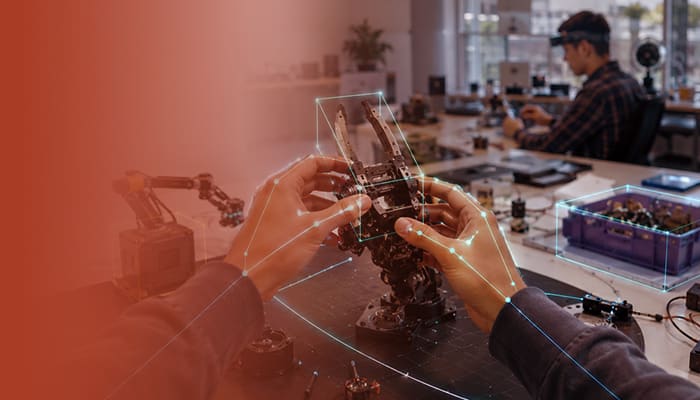
Problem: Capture natural, non-staged first-person footage — hands and work area in view — with consent and fast QA at scale.
Solution: Head-mounted smartphone capture via a dedicated app, with location verification, one-day review and hand-object visibility checks.
Result: 30,000 hours collected · 24,000+ hours annotated and training-ready, across the US and Latin America.
Security & Compliance
Get a Physical AI Data Quote
Tell us your data type and volume. We scope a pilot you evaluate against your own benchmarks, then scale it with experienced annotators and multi-layer QA.
Contact UsFrequently Asked Questions (FAQ)
1. What does grasping annotation include?
Grasp pose (position, orientation, grip type and contact points), force and contact labels, the pre-grasp approach — angle, clearance and speed — and failure-and-recovery labels for every unsuccessful attempt.
2. Why label failed grasps, not just successful ones?
Models trained only on successful grasps struggle in production. Labeling each failure with its category and corrective action teaches a robot how to recover.
3. Can you annotate grasps on deformable objects?
Yes. Force and contact-point labels are built for deformable objects, where contact location and pressure matter as much as grasp position.
4. Do you also collect manipulation demonstrations?
Yes. We capture real-world demonstrations across 60+ countries and annotate them in one engagement, or annotate the robot and teleoperation data you already have.
5. How is our data kept secure?
Every project runs under SOC 2 Type II, ISO 27001, ISO 9001:2015, HIPAA and GDPR controls, with an NDA signed on day one, de-identification available and auditable data provenance.
6. How do we start a project with Shaip?
Share your data type, volume and target labels. We scope the object-labeling guidelines and edge cases with your team, run a pilot sized to your requirement that you evaluate against your own benchmarks, then scale with multi-layer QA.