
What is Multimodal Data Labeling? Complete Guide 2025
The rapid advancement of AI models like OpenAI’s GPT-4o and Google’s Gemini has revolutionized how we think about artificial intelligence. These sophisticated systems don’t just process text—they seamlessly integrate images, audio, video, and sensor data to create more intelligent and contextual responses. At the heart of this revolution lies a critical process: multimodal data labeling.
But what exactly is multimodal data labeling, and why has it become fundamental to modern AI development? This comprehensive guide explores everything you need to know about this essential technique that’s shaping the future of artificial intelligence.
Understanding Multimodal Data Labeling
Multimodal data labeling is the process of annotating and categorizing multiple types of data simultaneously to train AI models that can process and understand various data formats. Unlike traditional labeling methods that focus on a single data type, multimodal labeling creates connections and relationships between different modalities—text, images, audio, video, and sensor data—enabling AI systems to develop a more comprehensive understanding of complex real-world scenarios.
Think of it as teaching an AI to understand the world the way humans do. When we watch a movie, we don’t just see images or hear sounds in isolation—we process visual cues, dialogue, music, and context all at once. Multimodal data labeling enables AI systems to develop similar capabilities.
The Five Core Data Modalities
To truly grasp multimodal data labeling, it’s essential to understand the different types of data modalities involved:
Image Data
Visual information in the form of photographs, medical scans, sketches, or technical drawings. For instance, medical imaging datasets include X-rays, CT scans, and MRIs that require precise annotation for AI-powered diagnostic systems.
Text Data
Natural language content from documents, reports, social media posts, or transcripts. This includes everything from clinical notes to customer reviews.
Video Data
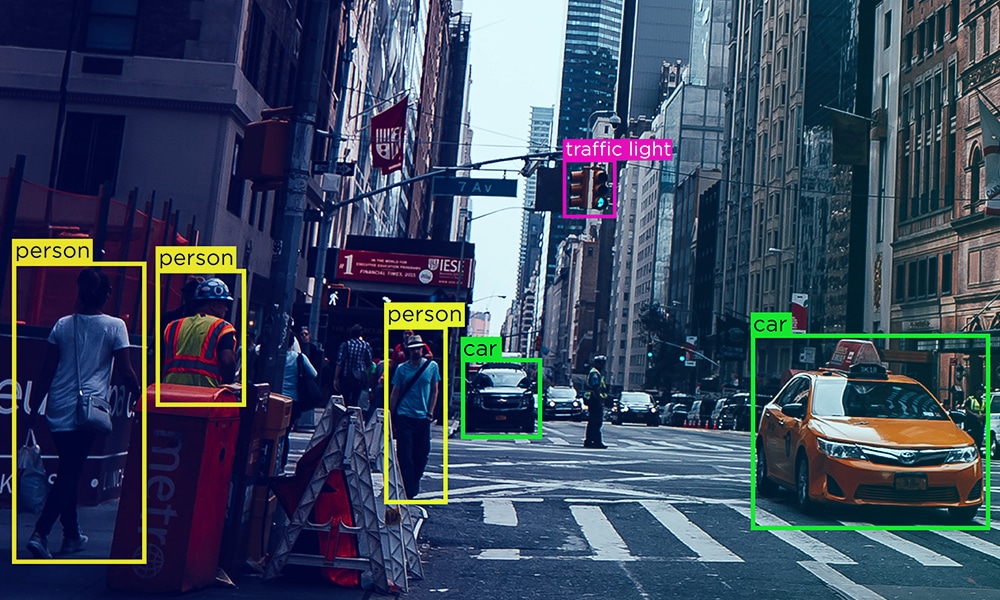
Moving images combined with audio, creating temporal relationships between visual and auditory information. Video annotation is particularly crucial for applications like autonomous driving and security systems.
Audio Data
Sound recordings including speech, music, environmental sounds, or medical audio like heartbeats. Speech data collection across multiple languages and dialects is essential for building robust conversational AI systems.
Sensor Data
Information from IoT devices, GPS systems, accelerometers, or medical monitoring equipment. This data type is increasingly important for healthcare AI and smart city applications.
Why Multimodal Data Labeling Matters
The significance of multimodal data labeling extends far beyond technical requirements. According to recent industry research, models trained on properly labeled multimodal data demonstrate up to 40% better performance in real-world applications compared to single-modality models. This improvement translates directly into more accurate medical diagnoses, safer autonomous vehicles, and more natural human-AI interactions.
Consider a patient diagnosis system: a unimodal model analyzing only text records might miss critical visual indicators from X-rays or subtle audio cues from heart examinations. By incorporating multimodal training data, AI systems can synthesize information from patient records, medical imaging, audio recordings from stethoscopes, and sensor data from wearables—creating a comprehensive health assessment that mirrors how human doctors evaluate patients.
The evolution from manual to automated multimodal data labeling has transformed the AI development landscape. While early annotation efforts relied entirely on human labelers working with basic tools, today’s platforms leverage machine learning to accelerate and enhance the labeling process.
Leading Annotation Platforms
Modern annotation platforms like provide unified environments for handling diverse data types. These tools support:
Integrated workflows for text, image, audio, and video annotation
Quality control mechanisms to ensure labeling accuracy
Collaboration features for distributed teams
API integrations with existing ML pipelines
Shaip’s data annotation services exemplifies this evolution, offering customizable workflows that adapt to specific project requirements while maintaining stringent quality standards through multi-level validation processes.
Automation and AI-Assisted Labeling
The integration of AI into the labeling process itself has created a powerful feedback loop. Pre-trained models suggest initial labels, which human experts then verify and refine. This semi-automated approach reduces labeling time by up to 70% while maintaining the accuracy essential for training robust multimodal models.

The Multimodal Data Labeling Process
Successfully labeling multimodal data requires a systematic approach that addresses the unique challenges of each data type while maintaining cross-modal consistency.
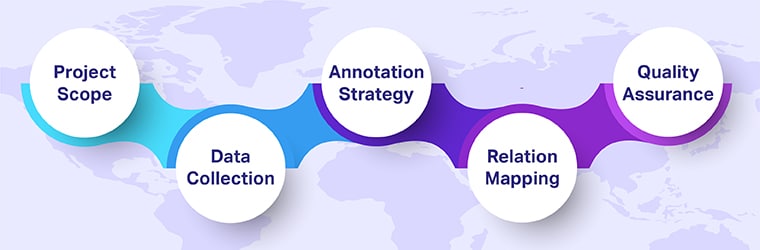
Step 1: Project Scope Definition
Begin by clearly identifying which modalities your AI model needs and how they’ll interact. Define success metrics and establish quality benchmarks for each data type.
Step 2: Data Collection and Preparation
Gather diverse datasets representing all required modalities. Ensure temporal alignment for synchronized data (like video with audio) and maintain consistent formatting across sources.
The critical differentiator in multimodal labeling is establishing connections between modalities. This might involve linking text descriptions to specific image regions or synchronizing audio transcripts with video timestamps.
Step 5: Quality Assurance and Validation
Implement multi-tier review processes where different annotators verify each other’s work. Use inter-annotator agreement metrics to ensure consistency across your dataset.
Real-World Applications Transforming Industries
Autonomous Vehicle Development
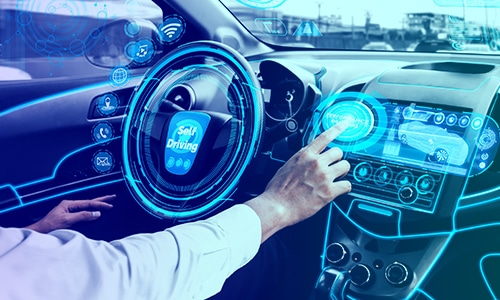
Self-driving cars represent perhaps the most complex multimodal challenge. These systems must simultaneously process:
Visual data from multiple cameras
LIDAR point clouds for 3D mapping
Radar signals for object detection
GPS coordinates for navigation
Audio sensors for emergency vehicle detection
Accurate multimodal labeling of this data enables vehicles to make split-second decisions in complex traffic scenarios, potentially saving thousands of lives annually.
Healthcare AI Revolution

Healthcare AI solutions increasingly rely on multimodal data to improve patient outcomes. A comprehensive diagnostic AI might analyze:
Electronic health records (text)
Medical imaging (visual)
Physician dictation notes (audio)
Vital signs from monitoring devices (sensor data)
This holistic approach enables earlier disease detection and more personalized treatment plans.
Next-Generation Virtual Assistants

Modern conversational AI goes beyond simple text responses. Multimodal virtual assistants can:
Understand spoken queries with visual context
Generate responses combining text, images, and voice
Interpret user emotions through voice tone and facial expressions
Provide contextually relevant visual aids during explanations
Overcoming Multimodal Labeling Challenges
Data Synchronization Complexity
Aligning data from different sources operating at various resolutions and time scales remains a significant challenge. Solutions include:
Implementing robust timestamp protocols
Using specialized synchronization software
Creating unified data formats for seamless integration
Scalability Concerns
The sheer volume of multimodal data can overwhelm traditional annotation workflows. Organizations address this through:
Cloud-based annotation platforms
Distributed labeling teams
Automated pre-labeling with human verification
Maintaining Annotation Consistency
Ensuring consistent labeling across modalities requires:
As AI models become increasingly sophisticated, multimodal data labeling will continue evolving. Emerging trends include:
Zero-shot learning reduces labeling requirements
Self-supervised approaches leveraging unlabeled multimodal data
Federated labeling preserving privacy while improving models
Real-time annotation for streaming multimodal data
Conclusion
Multimodal data labeling stands at the forefront of AI advancement, enabling systems that understand and interact with the world in increasingly human-like ways. As models continue growing in complexity and capability, the quality and sophistication of multimodal data labeling will largely determine their real-world effectiveness.
Organizations looking to develop cutting-edge AI solutions must invest in robust multimodal data labeling strategies, leveraging both advanced tools and human expertise to create the high-quality training data that tomorrow’s AI systems demand. Contact us today.
How long does multimodal data labeling typically take?
Timeline varies significantly based on data volume and complexity. A mid-sized project with 100,000 multimodal data points typically requires 4-8 weeks with a professional annotation team.
What's the difference between multimodal and unimodal labeling?
Unimodal labeling focuses on a single data type (just text or just images), while multimodal labeling annotates multiple data types and, crucially, the relationships between them.
Can small teams effectively perform multimodal data labeling?
Yes, with the right tools and workflows. Cloud-based platforms enable small teams to manage large-scale multimodal projects by leveraging automation and distributed workflows.
How do you ensure quality in multimodal data labeling?
Quality assurance involves multi-tier review processes, inter-annotator agreement metrics, automated validation checks, and continuous annotator training and feedback.
What industries benefit most from multimodal data labeling?
Healthcare, automotive, retail, security, and entertainment industries see the greatest returns from multimodal AI systems trained on properly labeled data.
Contains information related to marketing campaigns of the user. These are shared with Google AdWords / Google Ads when the Google Ads and Google Analytics accounts are linked together.
90 days
__utma
ID used to identify users and sessions
2 years after last activity
__utmt
Used to monitor number of Google Analytics server requests
10 minutes
__utmb
Used to distinguish new sessions and visits. This cookie is set when the GA.js javascript library is loaded and there is no existing __utmb cookie. The cookie is updated every time data is sent to the Google Analytics server.
30 minutes after last activity
__utmc
Used only with old Urchin versions of Google Analytics and not with GA.js. Was used to distinguish between new sessions and visits at the end of a session.
End of session (browser)
__utmz
Contains information about the traffic source or campaign that directed user to the website. The cookie is set when the GA.js javascript is loaded and updated when data is sent to the Google Anaytics server
6 months after last activity
__utmv
Contains custom information set by the web developer via the _setCustomVar method in Google Analytics. This cookie is updated every time new data is sent to the Google Analytics server.
2 years after last activity
__utmx
Used to determine whether a user is included in an A / B or Multivariate test.
18 months
_ga
ID used to identify users
2 years
_gali
Used by Google Analytics to determine which links on a page are being clicked
30 seconds
_ga_
ID used to identify users
2 years
_gid
ID used to identify users for 24 hours after last activity
24 hours
_gat
Used to monitor number of Google Analytics server requests when using Google Tag Manager
1 minute
Marketing cookies are used to follow visitors to websites. The intention is to show ads that are relevant and engaging to the individual user.
Google Ads is an online advertising platform that enables businesses to create targeted ads displayed on Google search results and partner sites.
Targeting cookie. Used to create a user profile and display relevant and personalised Google Ads to the user.
2 years
FPGCLAW
Google uses cookies for advertising, including serving and rendering ads, personalizing ads (depending on your ad settings at g.co/adsettings), limiting the number of times an ad is shown to a user, muting ads you have chosen to stop seeing, and measuring the effectiveness of ads.
90 Days
FPGCLGB
Google uses cookies for advertising, including serving and rendering ads, personalizing ads (depending on your ad settings at g.co/adsettings), limiting the number of times an ad is shown to a user, muting ads you have chosen to stop seeing, and measuring the effectiveness of ads.
90 Days
_gac_gb_
Google uses cookies for advertising, including serving and rendering ads, personalizing ads (depending on your ad settings at g.co/adsettings), limiting the number of times an ad is shown to a user, muting ads you have chosen to stop seeing, and measuring the effectiveness of ads.
90 Days
_gcl_gb
Google uses cookies for advertising, including serving and rendering ads, personalizing ads (depending on your ad settings at g.co/adsettings), limiting the number of times an ad is shown to a user, muting ads you have chosen to stop seeing, and measuring the effectiveness of ads.
90 Days
_gcl_gs
Google uses cookies for advertising, including serving and rendering ads, personalizing ads (depending on your ad settings at g.co/adsettings), limiting the number of times an ad is shown to a user, muting ads you have chosen to stop seeing, and measuring the effectiveness of ads.
90 Days
_gcl_aw
Google uses cookies for advertising, including serving and rendering ads, personalizing ads (depending on your ad settings at g.co/adsettings), limiting the number of times an ad is shown to a user, muting ads you have chosen to stop seeing, and measuring the effectiveness of ads.
90 Days
Conversion
Google uses cookies for advertising, including serving and rendering ads, personalizing ads (depending on your ad settings at g.co/adsettings), limiting the number of times an ad is shown to a user, muting ads you have chosen to stop seeing, and measuring the effectiveness of ads.
90 days
__Secure-3PSID
Targeting cookie. Used to profile the interests of website visitors and display relevant and personalised Google ads.
2 years
__Secure-1PSID
Targeting cookie. Used to create a user profile and display relevant and personalised Google Ads to the user.
2 years
__Secure-1PSIDTS
Targeting cookie. Used to create a user profile and display relevant and personalised Google Ads to the user.
2 years
__Secure-3PSIDTS
Targeting cookie. Used to create a user profile and display relevant and personalised Google Ads to the user.
2 years
__Secure-3PSIDCC
Targeting cookie. Used to create a user profile and display relevant and personalised Google Ads to the user.
2 years
ADS_VISITOR_ID
Cookie required to use the options and on-site web services
2 months
AEC
AEC cookies ensure that requests within a browsing session are made by the user, and not by other sites. These cookies prevent malicious sites from acting on behalf of a user without that user's knowledge.
6 months
__Secure-3PAPISID
Profiles the interests of website visitors to serve relevant and personalised ads through retargeting.
2 years
__Secure-1PSIDCC
Targeting cookie. Used to create a user profile and display relevant and personalised Google Ads to the user.