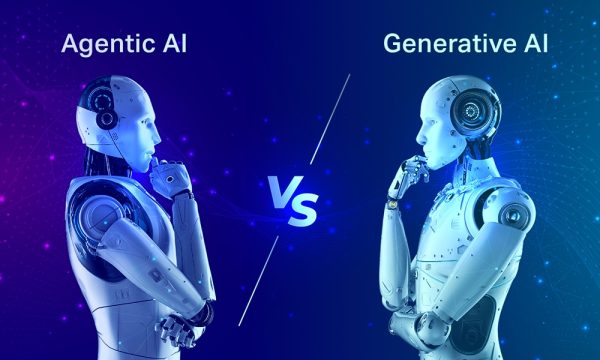
If 2023 was the year of generative AI, 2025 is quickly becoming the year of agentic AI. Generative models can write emails, draft code, or create images. Agentic systems go a step further: they plan, act, and adapt to complete multi-step tasks with less hand-holding.
For leaders, the question is no longer “Should we use AI?” It’s:
Which kind of AI belongs where in our stack: generative, agentic, or both?
This guide breaks down agentic AI vs generative AI in plain language, shows where each shines, and explains how the right data, human oversight, and evaluation can make them safe and effective for your business.
1. Why Agentic AI vs Generative AI Matters Now
Generative AI changed how we draft content, answer questions, and explore ideas. But most enterprises discovered that content generation alone doesn’t close the loop. Someone still has to check the output, push buttons in other systems, and make sure policies are followed.
Meanwhile, agentic AI has emerged as the next step: AI agents that can take actions across tools, not just answer prompts. They update records, trigger workflows, and collaborate with humans.
Analysts expect agentic AI adoption to grow rapidly in enterprises over the next few years, even as many early projects get scrapped due to cost, complexity, or unclear value. That makes it even more important to understand the difference between buzz and real business impact.
2. What Is Generative AI? (The Creative Engine)
Generative AI refers to models that learn from large datasets and then generate new content—text, code, images, audio, or video—based on a prompt.
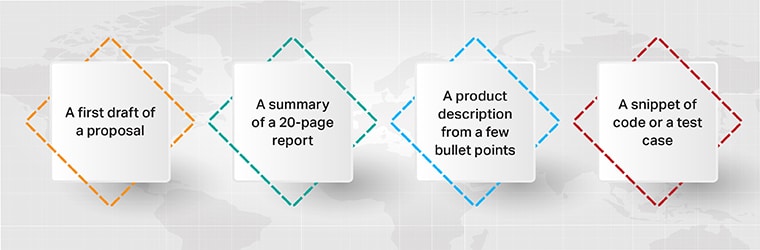
Think of generative AI as a very fast, reasonably knowledgeable writer and designer. You ask for:
- A first draft of a proposal
- A summary of a 20-page report
- A product description from a few bullet points
- A snippet of code or a test case
…and the model produces something that would have taken a human much longer.
Common enterprise use cases include:
- Productivity copilots that draft emails, meeting notes, and documentation
- Developer tools that suggest code or refactor functions
- Support assistants that propose replies based on knowledge base content
Generative models are powerful, but they still wait for you to ask and don’t own the entire workflow. They don’t, by themselves, close tickets, update systems, or orchestrate multi-step processes safely.
3. What Is Agentic AI? (The Autonomous Operator)
Agentic AI is an approach where AI systems are designed as agents that can plan, act, and adapt to achieve goals with limited supervision.

Instead of just generating content, an AI agent:
- Understands a goal (for example, “resolve this support case”).
- Breaks it into steps (retrieve context, ask clarifying questions, draft a response, update systems).
- Chooses and calls tools or APIs (CRM, ticketing, email, internal services).
- Observes results and adjusts its plan.
Analogy:
- Generative AI is like a talented writer or designer.
- Agentic AI is like a project manager who delegates, tracks progress, and ensures the job gets done.
A real-world example: An on-call reliability agent watches monitoring alerts, groups related ones, checks recent deployments, suggests likely root causes, and opens or updates incidents while keeping human engineers in the loop.
Agentic systems almost always use multiple models and tools, and often embed generative AI for specific steps (for example, drafting messages or queries). In practice, agentic AI is less about one “super model” and more about orchestrating many components in a robust way.
4. Agentic AI vs Generative AI: Key Differences
While generative and agentic AI often work together, they are not the same. A helpful way to see the contrast is across goals, inputs, outputs, data, and evaluation.
The safest deployments keep humans in the loop, log every action, and measure success based on business outcomes, not just model scores.
8. Where Shaip Fits: Data, Evaluation, and Human-in-the-Loop
Whether you’re deploying generative AI, agentic AI, or a mix of both, one constant remains: your systems are only as reliable as the data, evaluation, and human oversight behind them.
Shaip brings three key strengths to agentic and generative AI projects:
- High-quality, domain-specific training data
Shaip provides curated AI training data services across text, audio, image, and video, so your models learn on diverse, representative examples rather than generic internet noise. Example: AI training data services - Generative AI solutions for content and workflows
With Generative AI services and solutions, Shaip helps teams design and fine-tune models, implement RAG pipelines, and generate synthetic data that feeds both generative models and agentic workflows. Example: Generative AI services and solutions - Human-in-the-loop evaluation and safety
Agentic systems and large language models need real-world evaluation, not just lab benchmarks. Shaip’s human-in-the-loop approach focuses on safety, bias reduction, and continuous feedback loops—critical for agentic AI that takes real actions. Example: Human-in-the-loop for generative AI

If you’re exploring where agentic AI belongs in your roadmap, a practical starting point is to:
- Identify a high-impact but bounded workflow (for example, post-resolution support follow-ups or internal incident summaries).
- Ensure you have the right datasets and evaluation processes in place.
- Pilot the workflow using Shaip’s data services and Generative AI offerings, then gradually add more agentic autonomy as evaluation results prove reliability.