
Image Data Collection Services for Computer Vision
Custom, fully-consented image datasets — any subject, any scenario, built to your model’s specs.
Why Image Training Dataset is needed for Computer Vision?
Image data collection is the process of capturing, sourcing, and curating image datasets to train computer vision and machine learning models. Shaip collects custom, fully-consented images — across faces, documents, objects, scenes, and medical imagery — tailored to each model’s domain, resolution, and demographic requirements, then quality-checks every image through a Six Sigma process.
Smart ML models and setups that are tasked with identifying objects and patterns as part of their functioning need to be trained extensively. Starting from tracking interactions to human emotions, intelligent systems must have the basis to identify entities in the first place. The power of identification is provided by custom image data collection solutions.
Image data collection for computer vision systems comes with the following benefits:
- Unique image-specific repository
- Ability to label images as per requirements
- Access to truckloads of historical data
Professional Image Training Datasets
Any subject. Any scenario.
Applications that need facial and gestural tagging cannot be fed information, superficially. Instead, image data collection for machine learning models must be at par with the latest standards. At Shaip, we focus on providing access to comprehensive image training datasets with expert-level support towards scalability.
Professional image training datasets at Shaip focuses on all-inclusive solutions, including entity tracking, handwriting analysis, object identification, and pattern recognition. That’s not it! Image data collection services offered by Shaip also include:
- Remote and In-field data feeding
- Ability to scale solutions – continual dataset procurement
- High-quality and segmented data that is ready for mining
- Support for image-to-text transcription for OCR trained models
- Extensive support for human-specific analysis
- Secure data handling and management
Our Expertise
Image collection that precedes Subjects and Scenarios
At Shaip, we have an entire line-up of image data collection types, with algorithms synonymous with specific use cases. Add computer vision to your machine learning capabilities by collecting large volumes of image datasets (medical image dataset, invoice image dataset, facial dataset collection, or any custom data set) for a variety of use cases. At Shaip, we have an entire line-up of image data collection types, with algorithms synonymous with specific use cases. Various types of Image Datasets that we offer:

Document & OCR Image Collection
Shaip captures invoices, receipts, IDs, passports, and handwritten forms for OCR and document-understanding models, in multiple languages and capture conditions. Use case: OCR, KYC, document classification.

Facial & Demographic Image Collection
Shaip collects facial image datasets across ethnicities, ages, head poses, and lighting to reduce AI bias, with landmark-point options for recognition and emotion models. Use case: facial recognition, emotion AI, ADAS driver monitoring.

Healthcare Data Collection
Improve the quality of your digital healthcare setup and accuracy of medical diagnostics with qualitative and quantitative healthcare datasets on offer. We provide medical images i.e., CT Scan, MRI, Ultra Sound, Xray from various medical specialties such as Radiology, Oncology, Pathology, etc.

Food Dataset Collection
If you ever plan on developing a smart app that can capture and identify food images, under different lighting conditions, our food dataset collection can be quite handy.

Automotive Data Collection
Training the databases of self-driving cars with roadside elements, angle-specific insights, objects, sematic data, and more is possible with automotive datasets.

Hand Gesture Data Collection
If you have ever hand-swiped your mobile to sleep, you would be able to relate. Smart & IoT devices with sensors can benefit from our hand gesture data collection services.

Object Image Collection
Our object image collection service provides a wide array of images featuring different objects in various contexts and lighting conditions.

Landmark Image Collection
We specialize in collecting images of landmarks from around the world. Our datasets cover multiple angles, times of day, and weather conditions

Handwritten Text Collection
Collection of handwritten text images in various languages & styles to develop AI models capable of recognizing and interpreting handwritten text with accuracy.
Image Datasets
Car Driver in focus Image Dataset
450k images of driver faces with car setup in different poses and variations covering 20,000 unique participants from 10+ ethnicities

- Use Case: In-car ADAS model
- Format: Images
- Volume: 455,000+
- Annotation: No
Landmark Image Dataset
80k+ images of landmarks from over 40 countries, collected based on custom requirement.

- Use Case: Landmark Detection
- Format: Images
- Volume: 80,000+
- Annotation: No
Facial Image Dataset
12k images with variations around head pose, ethnicity, gender, background, angle of capture, age etc. with 68 landmark points

- Use Case: Facial Recognition
- Format: Images
- Volume: 12,000+
- Annotation: Landmark Annotation
Food Image Dataset
55k images in 50+ variations (w.r.t. food type, lighting, indoor vs outdoor, background, camera distance etc.) with annotated images

- Use Case: Food Recognition
- Format: Images
- Volume: 55,000+
- Annotation: Yes
How It Works / Process

Scope & specs
Define subject, volume, locales, demographics, formats, and consent requirements.

Pilot & calibration
Run a small pilot to validate guidelines and edge cases before scaling.

Full-scale collection
Capture at volume through Shaip's vetted global contributor network.

Six Sigma QA
Multi-stage validation, gold tasks, and compliance checks on every batch.

Delivery & refresh
Deliver in your format with metadata, then extend coverage as needed.
Why Choose Shaip
Custom, not scraped: Shaip collects fresh, fully-consented images to your exact specs — domain, resolution, and demographic mix — instead of repackaging public sets.
Six Sigma quality: A dedicated team of Six Sigma black belts runs a stage-gate QA process with continuous feedback loops, so datasets ship validated.
Bias-aware coverage: Shaip sources across ethnicities, ages, geographies, and lighting conditions to cut visual-AI bias at the data layer.
Services Offered
Expert text data collection isn’t all-hands-on-deck for comprehensive AI setups. At Shaip, you can even consider the following services to make models way more widespread than usual:

Audio Data Collection Services
We make it easier for you to feed the models with voice data to help them explore the perks of Natural Language Processing in a more balanced way
Text Data Collection Services
The true value of Shaip cognitive data collection services is that it gives organizations the key to unlock critical information found within unstructured data
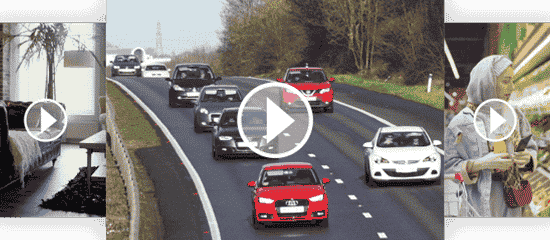
Video Data Collection Services
Now focus on computer vision along with NLP for training your models to identify objects, individuals, deterrents, and other visual elements to perfection
Recommended Resources
Buyer’s Guide
Image Annotation & Labeling for Computer Vision
Computer vision is all about making sense of the visual world to train computer vision applications. Its success completely boils down to what we call image annotation – the fundamental process behind the technology that makes machines make intelligent decisions and this is exactly what we are about to discuss and explore.
Solutions
Computer Vision Services & Solutions
Computer vision is an area of Artificial Intelligence technologies that train machines to see, understand, and interpret the visual world, the way humans do. It helps in developing the machine learning models to accurately understand, identify, and classify objects in an image or a video – at a much larger scale & speed.
Blog
Image Annotation Types: Pros, Cons And Use Cases
The world is not been the same ever since computers started looking at objects and interpreting them. From entertaining elements that could be as simple as a Snapchat filter that produces a funny beard on your face to complex systems that autonomously detect the presence of minute tumors from scan reports, computer vision is playing a major role in the evolution of humankind.
Featured Clients
Empowering teams to build world-leading AI products.
Want to build your own image dataset repository?
Reach out for a bird’s eye view on image training datasets & get yourself a repository for your Computer Vision model.
Frequently Asked Questions (FAQ)
Image data collection for AI/ML is the process of gathering visual data — photographs, scans, or graphics — to train, test, and validate machine learning models that interpret images. The collected images give computer vision systems the examples they need to recognize objects, faces, scenes, and patterns accurately in real-world conditions.
Image data collection begins by defining a project’s requirements and objectives. Images are then sourced from databases, freshly captured with cameras, or generated as needed, with diversity and quality treated as priorities. Once collected, the images are usually labeled or annotated to add the context and classification a machine learning model relies on during training.
Image data collection is fundamental to any machine learning project that deals with visual information. Quality, diverse image datasets produce more accurate and robust model training, which leads to stronger real-world performance. Well-collected data ensures AI systems can recognize, interpret, and respond to visual cues reliably across the conditions they will face in production.
Many types can be collected depending on the objective, including photographs, satellite imagery, handwritten and scanned documents, facial photographs, thermal images, and AR/VR captures. The type sourced should align with the specific requirements of the AI/ML project, since domain match directly affects model accuracy.
Custom collection captures fresh, fully-consented images matched to your model’s domain, resolution, and demographic needs. Public datasets like ImageNet or COCO are generic and often only get a model to prototype stage. Shaip collects to your exact specifications, so the data reflects the real conditions, subjects, and edge cases your application has to handle.
Shaip applies a Six Sigma stage-gate quality process, led by dedicated black-belt process owners, with validation and feedback loops on every batch. To reduce visual-AI bias at the data layer, Shaip sources across ethnicities, ages, geographies, and lighting conditions, so models perform fairly and consistently rather than skewing toward overrepresented groups.
Yes. Shaip collects image data through fully-consented sourcing with documented participant releases and secure, access-controlled handling and transfer. This matters for commercial use, where ambiguously licensed public images create legal risk.
Cost depends on image volume and type, target regions, required metadata, and consent requirements, so there is no flat rate. Shaip provides a custom quote after a short scoping conversation about your subject, specifications, and timeline, which keeps you from paying for collection scope your model does not actually need.